
Search Ashe County Court Records Online
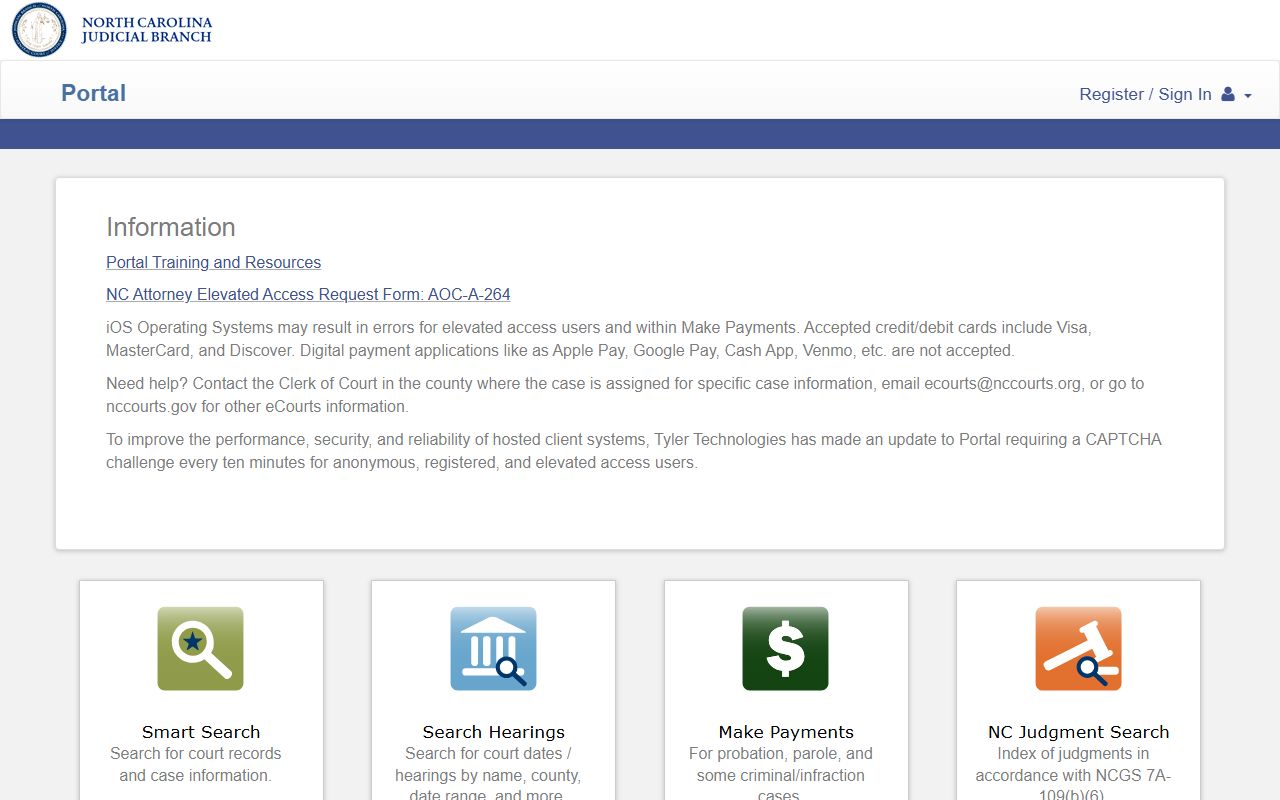
The main online entry point for Ashe County court records is the North Carolina eCourts Portal. The Portal has public tiles for Smart Search, Search Hearings, Make Payments, and NC Judgment Search. Smart Search is the broad case information path. Search Hearings is the date and hearing lookup path. Make Payments applies only to eligible probation, parole, criminal, and infraction matters. NC Judgment Search is identified by the Portal as the judgment index tied to G.S. 7A-109(b)(6).
The Ashe County Judicial Branch page is useful when the correct tool is not obvious because it links to court dates, civil calendars, criminal calendars, payment information, local forms, jury service, courthouse information, and statewide services. Public users may search some Ashe County court records without a Portal account, but the Portal text notes CAPTCHA checks and separate register, sign in, and elevated access options.
The eCourts Portal image below comes from the official NC eCourts Portal, the statewide starting point for Ashe County court records lookup.
- Start at the Ashe County Judicial Branch page when the case type is unclear. Use its official links to reach calendars, court dates, payments, local rules, and services.
- Use Smart Search in the eCourts Portal for general case information. Search by party name or case number when that information is available.
- Use Search Hearings or the civil and criminal calendar routes when the goal is a court date rather than a full case file.
- Use Make Payments only when the case is eligible for online payment. Ashe County payment instructions still matter for mail and in-person payments.
- Use NC Judgment Search when the record sought is a judgment index entry.
- Visit or contact the Clerk of Superior Court when online results are incomplete, a certified copy is needed, or the file must be inspected in the county where it was filed.
Ashe County Court Records Search Fields
The public-facing research did not expose every internal Tyler field because the Portal is JavaScript-gated, but the official Ashe County and Judicial Branch text confirms the core search paths below. Use precise names when possible. For criminal searches at courthouse public terminals, the state help topic says searches can be run by defendant name, case number, or victim/witness name.
| Field Label | Type | Required | Notes / Format |
|---|---|---|---|
| Name | Text | Unspecified | Used for court date search and public terminal criminal searches. |
| Citation Number | Text | Unspecified | Useful for traffic and infraction matters, including eligible mailed payments. |
| County | Dropdown or filter | Unspecified | Select Ashe when narrowing statewide court search results. |
| Date Range | Date filter | Optional or unspecified | Referenced by the Search Hearings tile for court date lookup. |
| Case Number | Text | Optional or unspecified | Available for courthouse terminal searches and case-specific lookup. |
| Victim or Witness Name | Text | Optional or unspecified | Used for criminal case searches at public terminals in clerk offices. |
| Smart Search | Tile | Not applicable | Opens court records and case information search. |
| Search Hearings | Tile | Not applicable | Opens court date and hearing search. |
| Make Payments | Tile | Conditional | For eligible probation, parole, criminal, and infraction obligations. |
| NC Judgment Search | Tile | Not applicable | Searches the judgment index described under G.S. 7A-109(b)(6). |
Types of Ashe County Court Records
Ashe County does not operate a separate county court system. Court records come from the Superior Court / District Court divisions of the North Carolina General Court of Justice, with the Clerk of Superior Court serving as the local court-records officer. Superior Court handles felony criminal cases and higher civil matters. District Court handles many misdemeanors, infractions, juvenile, family, small claims, and magistrate-linked matters.
The court-record categories below should not be mixed with Register of Deeds or sheriff files. Marriage licenses, birth and death certified copies, real estate instruments, plats, and notary oaths are Register of Deeds records. Booking reports, detention records, and law-enforcement incident records start with the sheriff or police agency. Court records are the filings, docket entries, orders, judgments, and case documents maintained through the clerk and the statewide court system.
- Civil court records can include complaints, answers, motions, judgments, money claims, property disputes, injunctions, and special proceedings.
- Criminal court records can include charges, hearing events, pleas, dispositions, sentences, costs, and probation payment eligibility.
- Traffic and infraction records can show citation handling, court dates, payment eligibility, and court disposition.
- Family and divorce records are court records when they involve court filings, orders, or divorce judgments.
- Estates and special proceedings are maintained through the Clerk of Superior Court, with public terminal search where available.
- Judgments may be searched through the Portal judgment tile and clerk records.
For statewide public-record routing, the Judicial Branch request a public record page separates court records from county, city, police, Register of Deeds, and other agency records.
What Ashe County Court Records Show
A case record is more than a search result. It may include a case number, names of parties, filing date, division, case type, charges or cause of action, docket entries, hearings, judgments, dispositions, fines, costs, and documents that are part of the paper or electronic file. Online access may show only part of that record. The physical or official file is handled by the Clerk of Superior Court in the county where the case is located.
| Field | What It Shows |
|---|---|
| Case Number | The court identifier for the case, citation, special proceeding, estate, or judgment record. |
| Party Names | Plaintiffs, defendants, petitioners, respondents, or criminal defendants tied to the file. |
| Court Division | Whether the matter is handled in Superior Court, District Court, magistrate-linked proceedings, or clerk estates/special proceedings. |
| Filing Date | The date the complaint, petition, charge, citation, or other initiating document entered the court system. |
| Docket Entries | A chronological list of filings, hearings, continuances, orders, and other case events. |
| Disposition | The outcome, such as judgment entered, dismissed, guilty, not guilty, closed, or another court result. |
| Financial Obligations | Costs, fines, restitution, or payment eligibility when the Portal or clerk record displays them. |
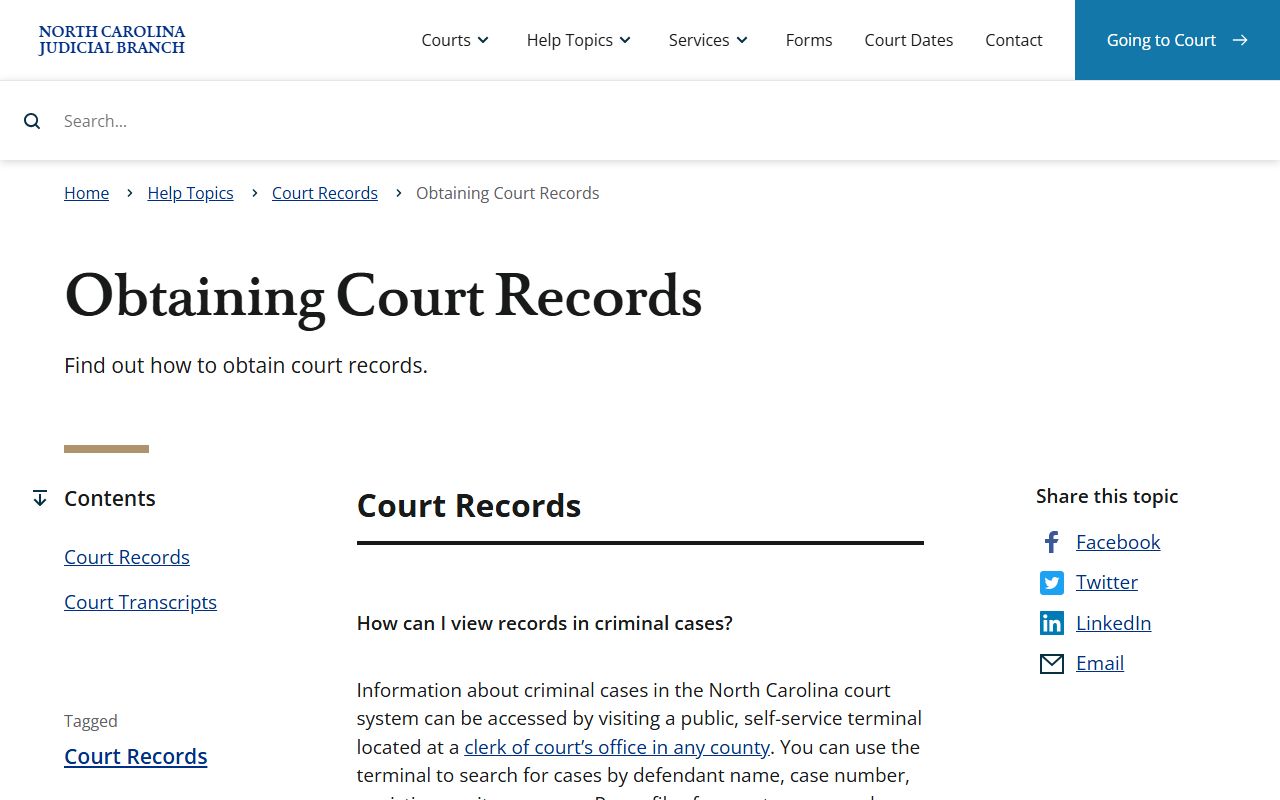
The official court-records help page, shown in the source capture from Obtaining Court Records, explains why online lookup and clerk file access are different channels.
Public Access to Ashe County Court Records
North Carolina court access is shaped by both court-record statutes and public-records law. G.S. 7A-109 requires clerks to maintain records, files, dockets, and indexes prescribed by the Administrative Office of the Courts, and it states that those records are open to public inspection during regular office hours unless the law prohibits access. Chapter 132 is North Carolina's public-records chapter, but case-specific court records still follow court laws, rules, and confidentiality limits.
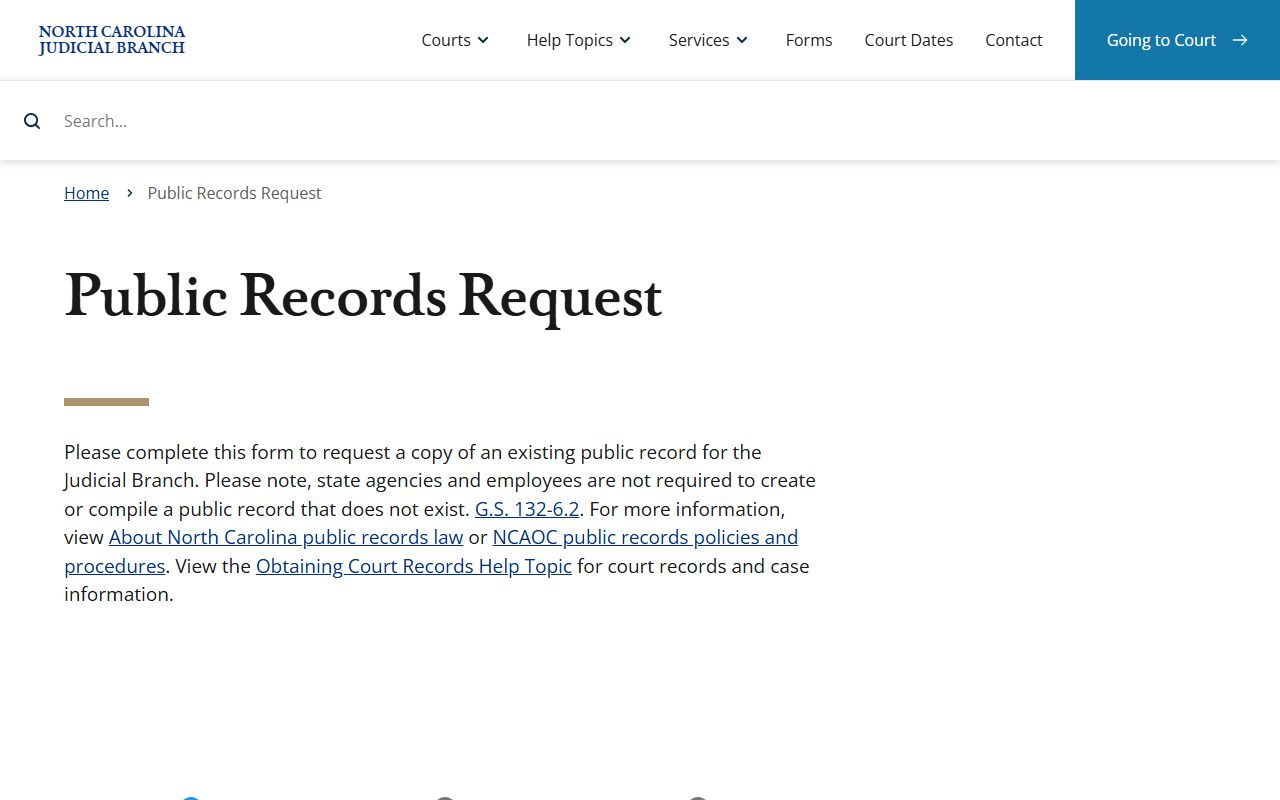
The Judicial Branch public records request page is mainly for existing Judicial Branch administrative records. It should not be treated as a replacement for Portal search or clerk file inspection. The research also notes that public agencies are not required to create or compile records that do not already exist. For Ashe County case files, the ordinary chain is Portal, public terminal, then the Clerk of Superior Court.
The image below is from the Judicial Branch public records request page, which helps separate administrative public records from case-file lookup.
Note: A public search result is not the same as a certified copy from the Clerk of Superior Court.
Restricted Ashe County Court Records
Some Ashe County court records are not open through ordinary public search. Juvenile delinquency, abuse, neglect, and dependency records are restricted. G.S. 7B-3000 says juvenile-record information remains confidential and is not placed in public records. Adoption records, involuntary hospitalization records, sealed files, and expunged matters also cannot be treated as ordinary public records.
Expunction is a legal process, not a website correction. The researched expunction source explains that eligibility depends on the charge, conviction class, prior record, waiting period, and statutory exclusions. Records that are sealed or expunged may not appear in Portal or terminal search even when an arrest or case once existed. Public versions of records may also redact Social Security numbers, financial account numbers, minor names, protected addresses, and other private identifiers.
Ashe County Clerk Record Requests
When a case document, older record, certified copy, or full file review is needed, use the Clerk of Superior Court for the county where the case is located. For Ashe County, that means the courthouse in Jefferson. The state help topic says the physical file for a court case can be viewed by visiting the clerk's office in the county where the case is located, and staff may provide copies for a fee.
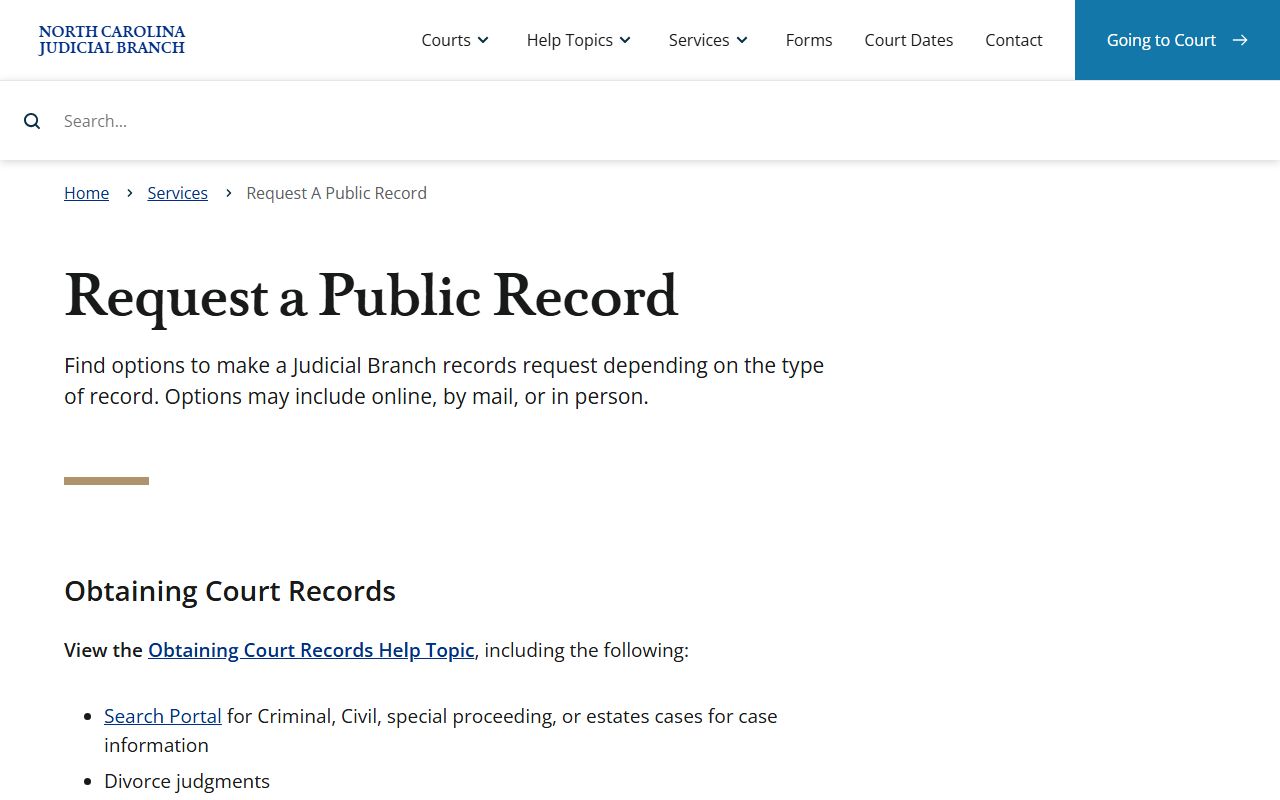
For online routing beyond case search, the Judicial Branch record request routing page explains which requests belong with court records, clerk offices, the Register of Deeds, law enforcement, or another agency.
Clerk of Superior Court
Ashe County Courthouse
150 Government Circle, Suite 3100
Jefferson, NC 28640
(336) 219-1400
Monday-Friday, 8:30 a.m.-5:00 p.m.