
Ashe County Probate Records Office
Probate in Ashe County is handled through the Estates Division of the Clerk of Superior Court. It is not a separate probate court. The office is part of the Ashe County Courthouse at 150 Government Circle, Jefferson, NC 28640. The Clerk of Superior Court phone number is (336) 219-1400. Estate files are court records and special proceedings maintained under North Carolina court-record rules, subject to any confidentiality limits that apply.
The North Carolina estates help topic explains the first estate steps after a death.
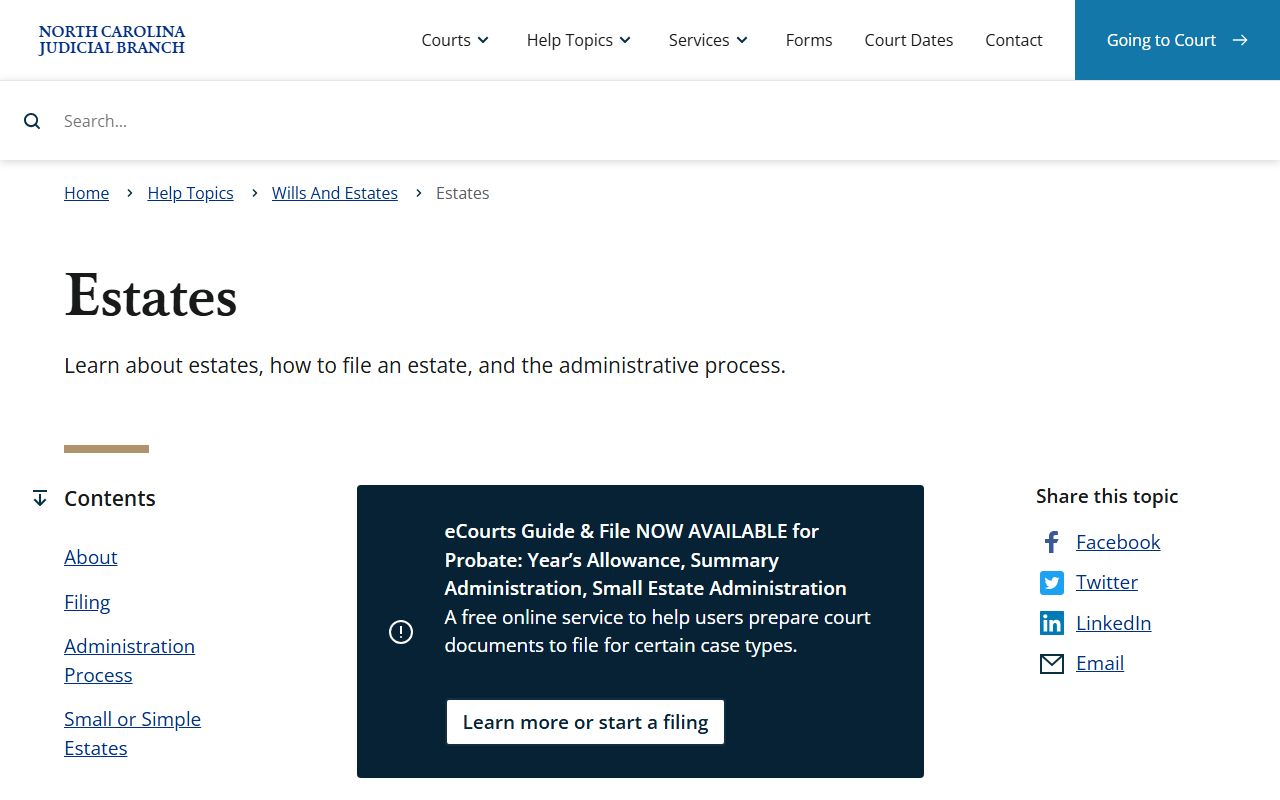
The state estates source is useful for Ashe County because the local estate process follows North Carolina court procedures through the clerk.
Estates Division of the Clerk of Superior Court
Ashe County Courthouse
150 Government Circle
Jefferson, NC 28640
(336) 219-1400
Regular courthouse hours: Mon-Fri, 8:30 a.m.-5:00 p.m.
Ashe County Probate Terms
Estate records use terms that can be hard to read without a plain meaning. These terms appear in wills, estate forms, clerk orders, inventories, and letters of authority.
- Testator
- The person who made a will.
- Executor
- The person named in a will to carry out the will and administer the estate.
- Intestate
- Dying without a valid will, which means distribution follows state law.
- Personal representative
- The executor or administrator authorized to act for the estate.
- Guardianship
- A court-supervised matter for a minor or an adult who needs a legally appointed guardian.
- Special proceeding
- A clerk or court matter such as estates, guardianships, foreclosures, and similar proceedings.
Start Ashe County Probate Records
Before filing, the person seeking to administer an estate should look for the will, obtain a certified death certificate, and identify assets. The state help topic notes that a will may be held by the decedent's attorney or may have been deposited for safekeeping with a clerk of court before death. If no will is found, checking with clerks in counties where the decedent once lived may be needed.
- Determine whether the decedent left a will and where that will is held.
- Obtain a certified death certificate and gather asset information.
- Contact or visit the Ashe County Clerk of Superior Court estates counter.
- Ask which estate procedure applies, such as full administration, small estate collection by affidavit, year allowance, summary administration, or another clerk proceeding.
- File the required forms and use current North Carolina Judicial Branch court-cost charts for estate and special proceeding fees.
- After appointment, handle notices, inventory, creditor claims, debts, distributions, and required accountings with the clerk.
A certified death certificate may be ordered through the Register of Deeds when that office holds the vital record. The Register of Deeds certified vital-record copy fee in the research is $10, but that is separate from probate filing costs.
Search Ashe County Probate Records
Ashe County estate information may be found through more than one access channel. Online access can help with case information, but the physical or electronic estate file for an Ashe County estate is inspected through the clerk in the county where the case is located. That county-specific file access matters when a user needs a will, inventory, accounting, order, or certified copy.
| Channel | What it covers | Notes |
|---|---|---|
| eCourts Portal | Case information for estates and special proceedings where available | Use Smart Search. Exact field controls may be gated by the public portal interface. |
| Public terminal | Civil, special proceeding, and estate case information | Available in clerk offices for public searches. |
| Clerk office inspection | The county estate file | Use the Ashe County Clerk of Superior Court for Ashe estate files. |
| Mail or phone | Copy, status, and routing questions | Call (336) 219-1400 before mailing a request. |
| Public records request | Judicial Branch administrative records | Not a substitute for ordinary court case or estate file lookup. |
The Ashe County land and vital search portal is the county-linked index route for Register of Deeds records that may relate to an estate.
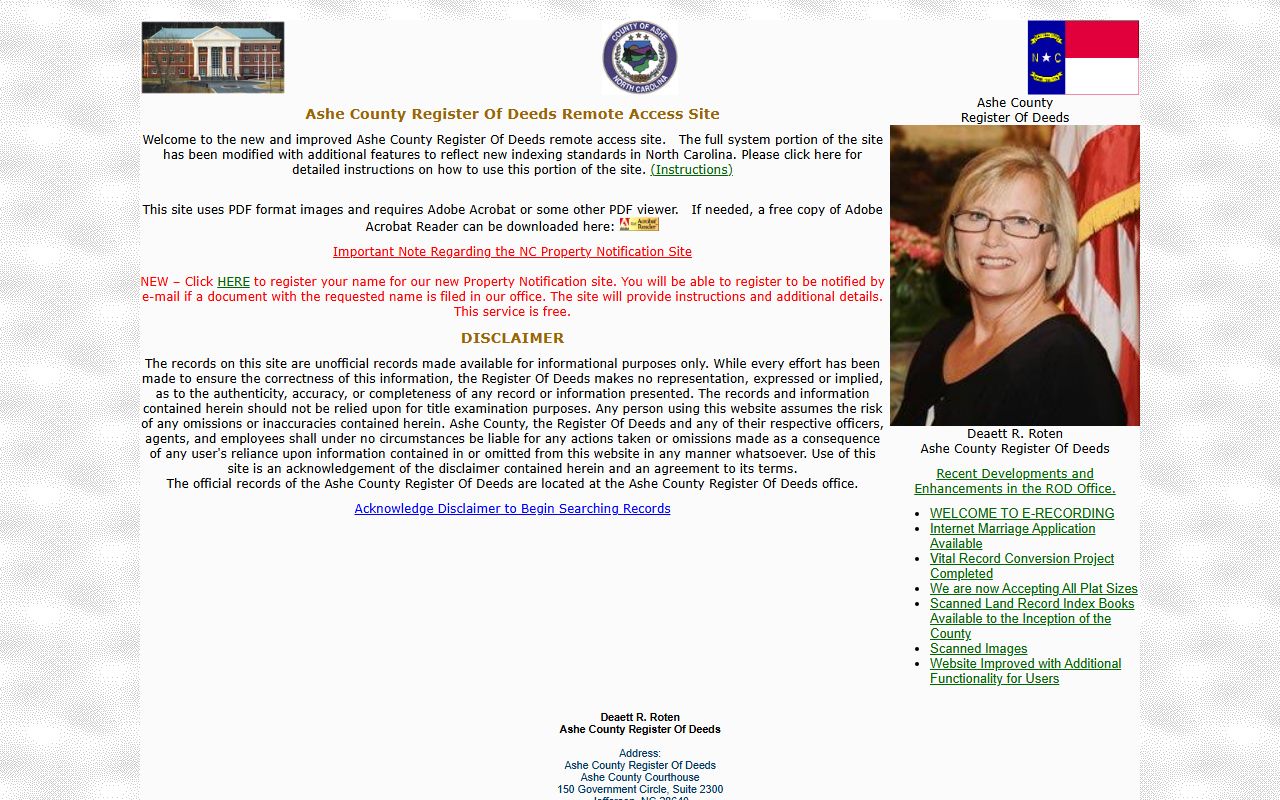
The Register of Deeds portal may help with linked land or vital records, but estate case files remain with the clerk's estates function.
Ashe County Probate Cost Sources
Ashe-specific probate filing fees were not fully located in the official county sources reviewed. Estate users should use the current North Carolina Judicial Branch court-cost charts for estate and special proceeding costs rather than importing fee numbers from another county. That gap is important because filing amounts can change and may vary by procedure.
| Cost item | Amount or source | Why it matters |
|---|---|---|
| Estate filing costs | Use current NC Judicial Branch court-cost charts | Research did not locate a complete Ashe-specific probate fee table. |
| Special proceeding costs | Use current NC Judicial Branch court-cost charts | Guardianship or other proceedings may use court cost schedules. |
| Certified death certificate | $10 when ordered from Register of Deeds vital records | This is a vital-record copy fee, not a court probate filing fee. |
| Recorded instruments | Use Register of Deeds fee schedule | Real-estate recordings may occur outside the estate case file. |
The county-linked vital-record request vendor is a separate path for certified vital-record requests, not an estate filing system.
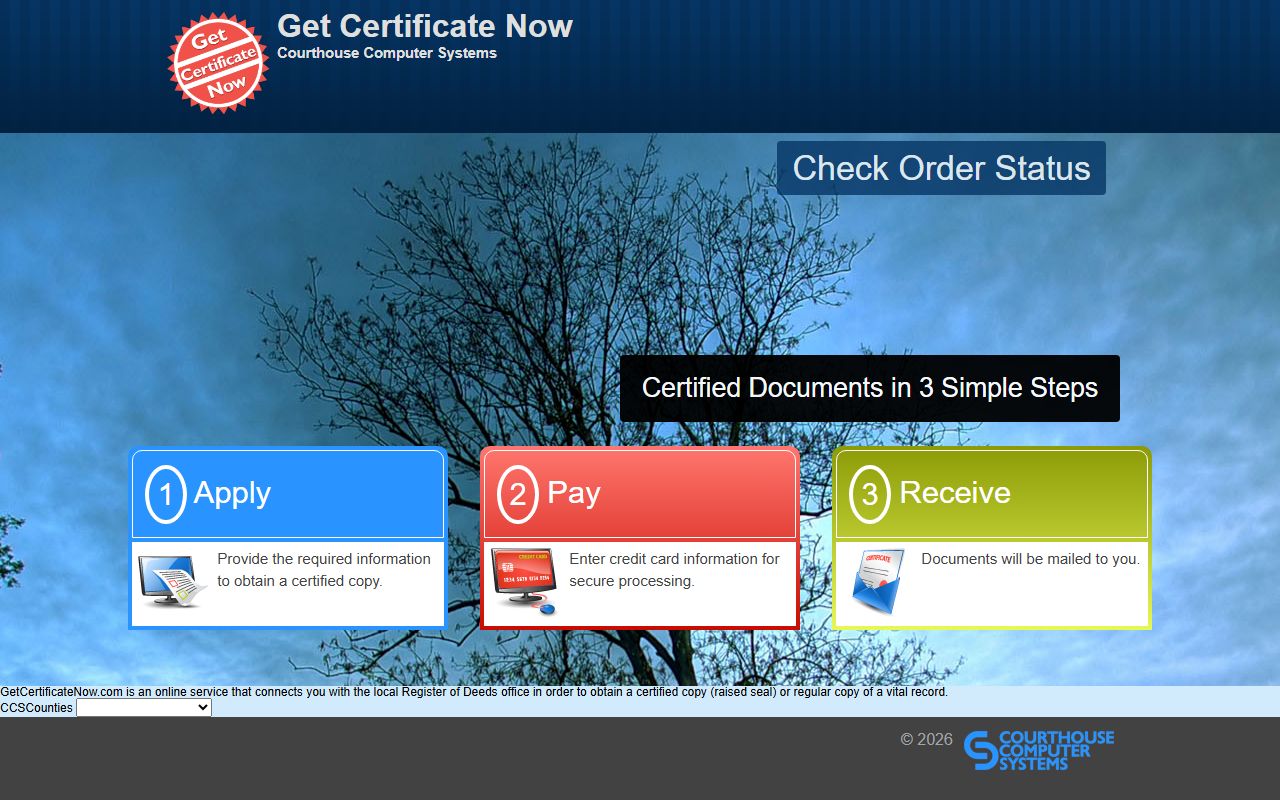
Vital-record copy costs can be part of estate preparation, but they should not be confused with filing costs paid to the court.
The NC Judicial Branch court costs page is the proper source for current court-cost charts.
What Ashe County Probate Records Show
An estate file may include the will, application or petition, clerk orders, letters of administration or letters testamentary, inventory, creditor claim information, accountings, receipts, distributions, and closing documents. Some files are simple. Others include real property, disputes, minor heirs, missing documents, or related special proceedings.
North Carolina marriage statutes and vital-record rules can intersect with estate work when family status, surviving spouse rights, or certified copies must be proved. The official Chapter 51 marriage statutes are a source for marital status rules in North Carolina.
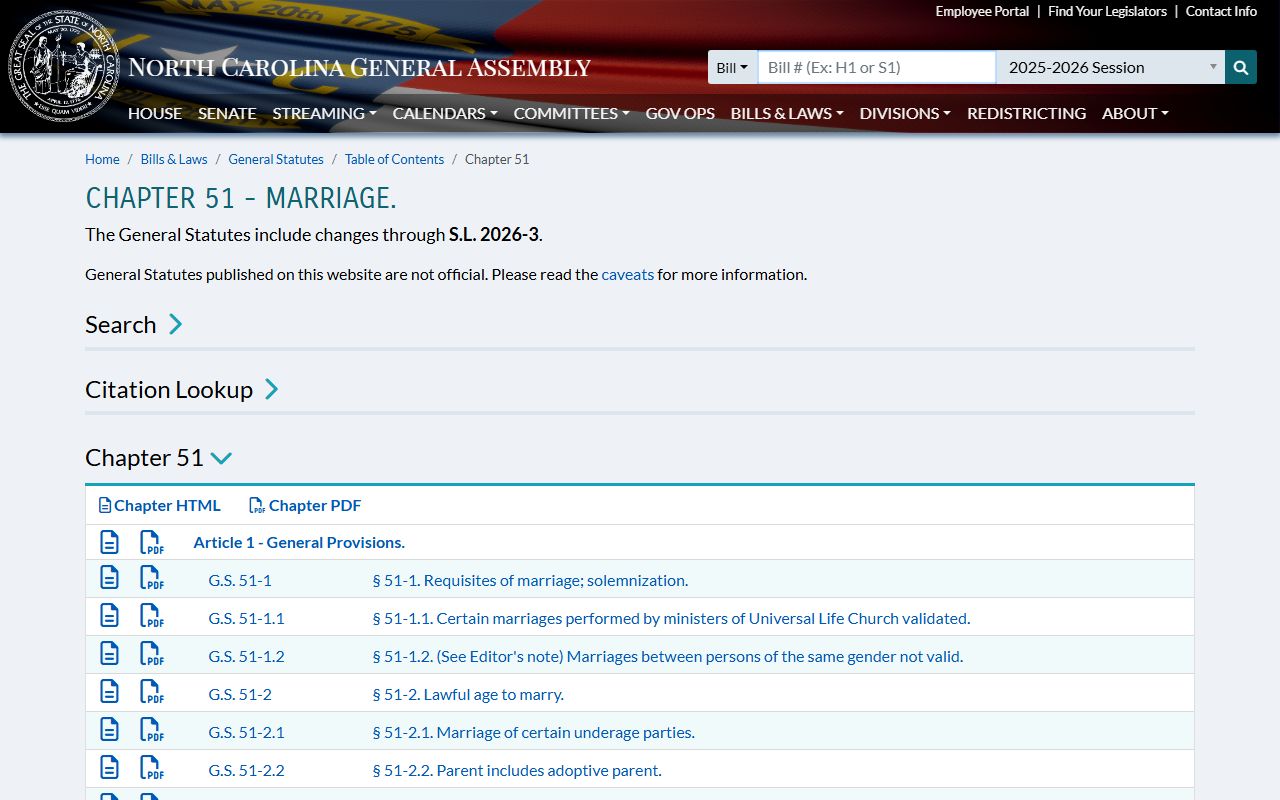
Marriage law is not probate law, but marital status can affect the estate questions brought to the clerk.
North Carolina's license requirement is also set by G.S. 51-6.
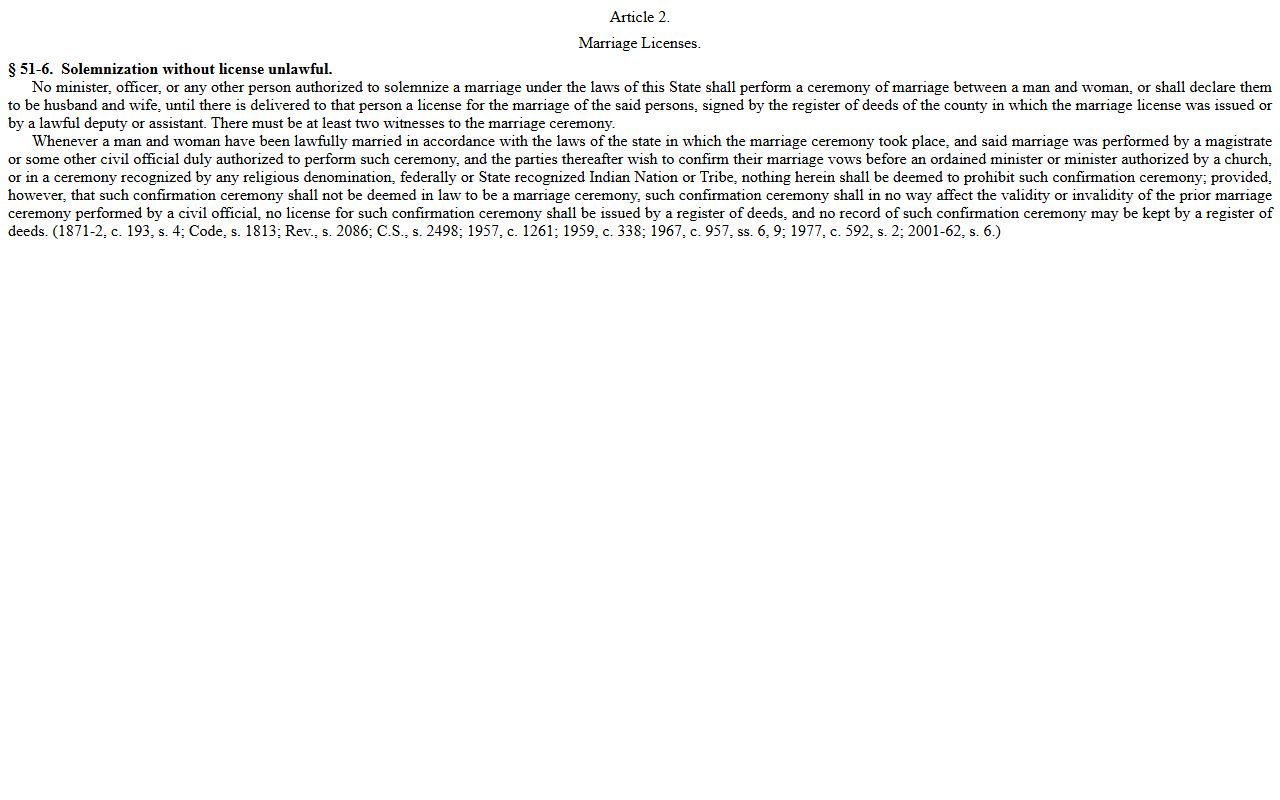
That statute can help verify why a certified marriage record may be requested during an estate matter.
Ashe County Probate Record Limits
Most routine estate files are public court records, but access can still depend on the record type and any court order or confidentiality rule. Guardianship matters, minor-related filings, protected personal identifiers, financial account data, and sealed material may be restricted or redacted. A public terminal result should not be treated as a complete file.
The Judicial Branch public-record request process is for existing Judicial Branch administrative records. It is not the normal route for inspecting an Ashe County estate file. For an estate case file, use the eCourts Portal, public terminal, and Clerk of Superior Court office first. For death certificates, use the Register of Deeds or state vital-record channels when appropriate.
Note: Probate is handled by the Ashe County Clerk of Superior Court estates function, not by a separate county probate court.